
Villages
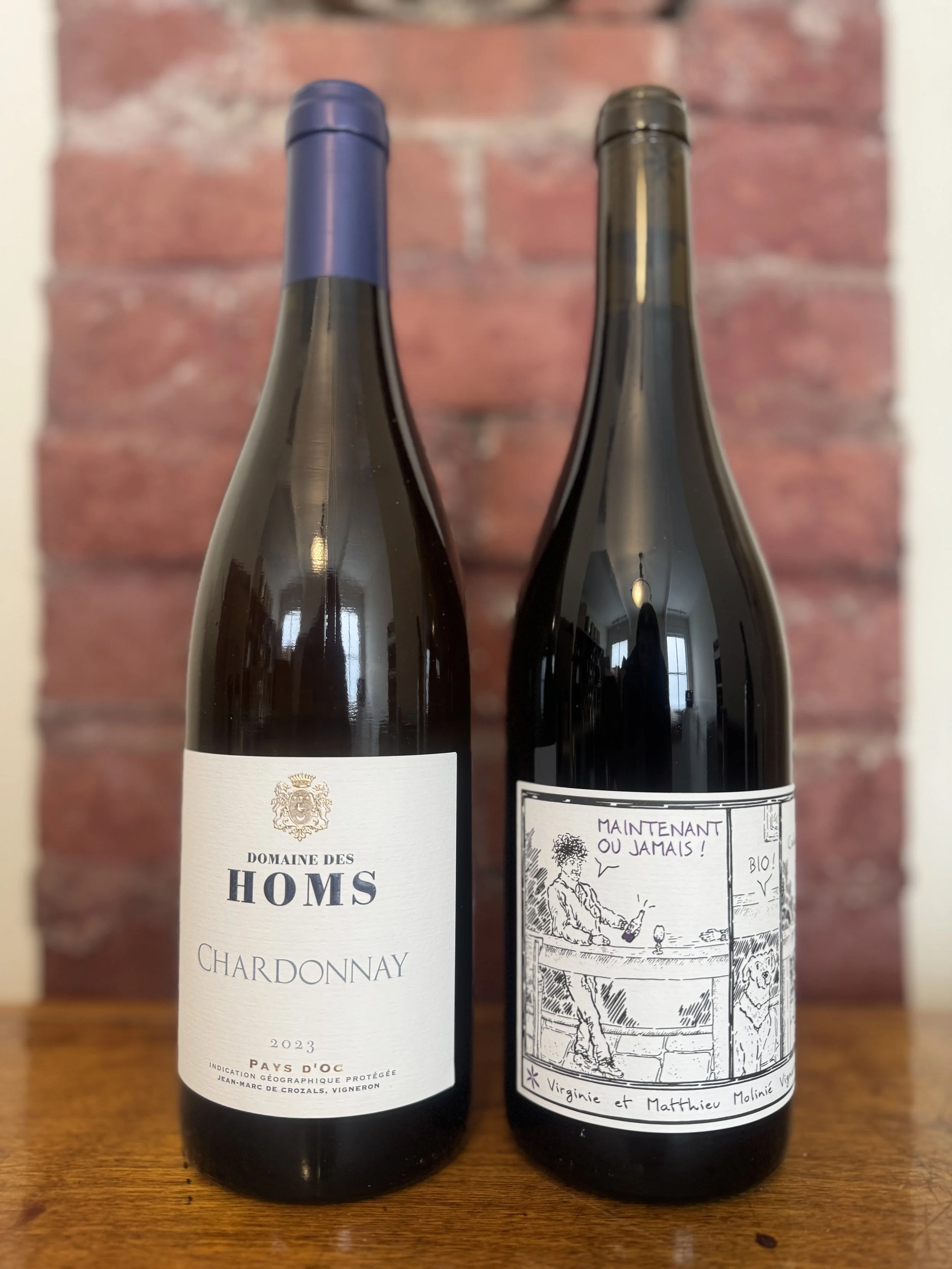
Domaine des Homs Pays d’Oc Chardonnay 2023
Domaine des Homs is a wine estate in the heart of the Languedoc region, at the foot of the Montagne Noire, within the Minervois Appellation d'Origine Contrôlée (AOC) area. The Mediterranean climate, with its very hot summers, is complemented by an easterly wind, the “marin,” which is mild and humid; and a northwesterly wind, the “cers,” which is very dry. The vineyard consists of 15 hectares planted with “AOC Minervois” grape varieties, and 7 hectares planted with “Vin de Pays” grape varieties. So what is “Vin de Pays?” Essentially, it is a designation for a wine that is nicer than a “table wine” but does not have its own AOC. This wine is organic and biodynamic, which is a great buzzword that we’ve all heard thrown around but let’s talk about what that means. “Biodynamic” is a practice that takes place in both the vineyard and the cellar. It’s tough enough to be organic, but this takes it a step further. Agriculturally, it is a holistic system that treats the vineyard as a living ecosystem. It goes beyond “no synthetic pesticides or herbicides” (the baseline for organic farming) by emphasizing soil vitality, biodiversity, composting, and farming in rhythm with seasonal and lunar cycles. In the cellar, this looks like low-intervention winemaking. This can mean native yeasts, gentle handling, and minimal additives. The wine itself is quite aromatic- straw, orange blossom, and golden apple. The acid is pronounced and activates your salivary glands immediately, but the gentle oak softens the blow and creates a warm finish. This is a style of wine that craves food. Think charcuterie or tapas- snacking and sipping.
Virginie & Matthieu Molinie Cahors Malbec “Maintenant ou Jemais” 2024
The Cahors wine region is in southwestern France, 160km east of Bordeaux, along the Lot River. It is famous for being the birthplace of Malbec, which must make up at least 70% of Cahors wines. The other 30% can be either Merlot or Tannat. Equidistant from the Atlantic Ocean and the Mediterranean, the climate of Cahors is oceanic until June and turns Mediterranean from July onwards, ensuring a perfect balance between acidity and ripeness. The vineyards at Château Ponzac are located on the Cahors plateau, which enjoys a cooler climate than the rest of the appellation and produces wines with a distinctive profile: vibrant fruit expression, plenty of freshness, and a long finish. Established in the village of Carnac-Rouffiac since the fourteenth century, the Molinié family is very linked to the history of the village and its wine-growing heritage. In 1998, at the age of 21, Matthieu Molinié took over the management of the family estate, after studying viticulture and oenology. He was joined in 2000 by his partner Virginie. Today they cultivate 28 hectares of vines and have been organically farmed since 2018. “Maintenant ou jamais” translates to “now or never,” and is one of their five vintages, distinguished by the distinct terroir per plot. This specific vintage is cultivated in marly limestone soil and vinified separately from its four neighboring plots. Before we get into tasting notes, I want to be very clear that this is a “natural” wine and is not necessarily meant to be drank immediately after opening. I’d recommend decanting this for 30 minutes minimum to get the best effect, but I found it was best after about an hour and a half. Once it opens up, it’s beautifully laced with black fruit (think blackberries and black cherries) with a gentle mineral finish. It has the freshness of Gamay with the fruit style that Malbec traditionally offers. I’d love this wine with anything grilled, like mushrooms or steak.
Premier Cru
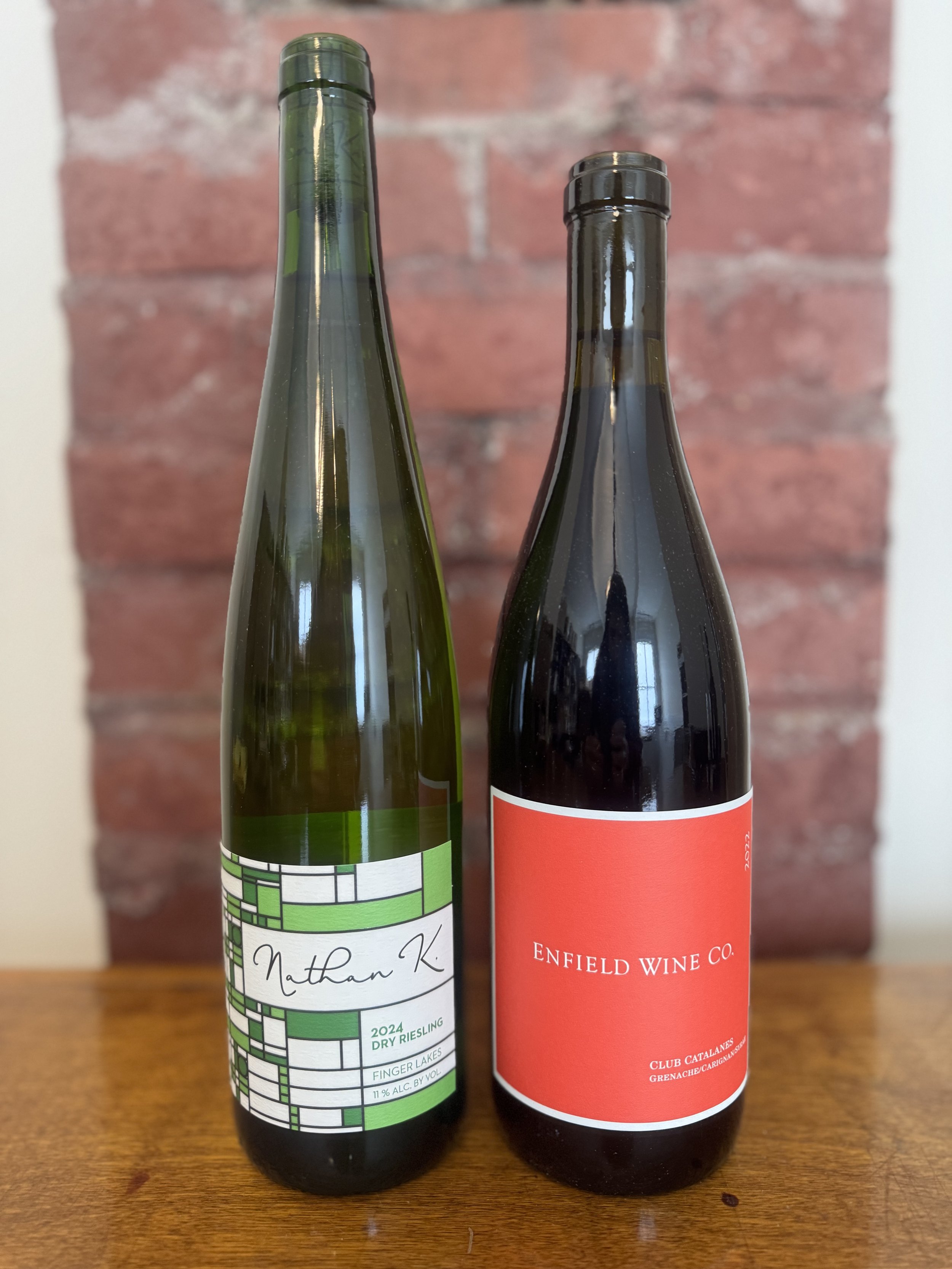
Nathan K. Dry Riesling 2024
Because of the cold weather and short growing seasons, the Finger Lakes have been known for growing grapes that are native to Germany and Alsace for decades. While the style of wines leaned towards sweet varietals such as ice wines and “Auslese” Rieslings, climate change has not left this area unaffected. Drier Rieslings are becoming more prominent, as well as more delicious. N. Kendall wines was founded in 2011 by Finger Lakes native Nathan Kendall. He is an internationally trained Winemaker who has experience in Sonoma, Willamette Valley, Waipara (New Zealand), Adelaide Hills (Australia), and Mosel (Germany), although the plan was always to return to the shores of Seneca Lake. His passion is to create wines in an old world style using quality grapes and minimal intervention. The fruit for this cuvée is sourced from three vineyards on Seneca Lake. The vines range from 20-40 years old in age. The juice is naturally fermented in a combination of neutral French oak and stainless steel. The wines are then aged on the gross lees (less refined, chunkier lees) until bottling the following summer. “Dry” is the key word on this label. This wine is Trocken in style with beautiful apricot fruit and crisp, driven acidity. You’d almost forget it was a Riesling if it weren’t for the faint smell of petrol and white flower, indicative of the varietal, and the soft but present body. Pair this with spicy Asian food, sushi, or brie cheese.
Enfield Wine Co. “Club Catalanes” Red 2022
Enfield is not a winery or vineyard, but a project created by John Lockwood and Amy Seese that carefully sources grapes from six vineyards across California. At Enfield, Lockwood pursues a “minimalist” philosophy: he works primarily with small vineyards and independent growers, seeks out distinctive soils and sites, uses native yeasts, employs moderate oak, and generally interferes as little as possible in the cellar. He and his team aim to make wines that convey a strong sense of place and transparency- wines that are not over‑polished but allowed to showcase the vineyards from which they are sourced. Because Lockwood does not own a large estate vineyard, Enfield sources fruit from across California's lesser known sites; from Wild Horse Valley to Fort Ross, Amador, Sonoma, and the outskirts of Napa. He works closely with growers to express the potential of each site. In a relatively short time, Enfield has earned a reputation for elegant, expressive wines that balance freshness and depth, carving out a distinctive niche in California’s “new style” movement. The Club Catalanes blend of Grenache, Syrah, and Carignan is a vibrant homage to the rugged charm of Southwest France in the foothills of the Pyrenees, but it is very much a wine of California. The nose is so brambly, like marionberry or expensive berry preserves, but there’s an undertone of forest floor and a sage-like savory-ness. The palate is both parallel to the nose but also dichotomous in its layers. The savory notes lead the charge this time, with a bouquet of florals and mouth-watering cherry, plum, and marionberry. This was one of my favorite’s from this month- a wine that can be as easy or as complicated as you make it, but delicious no matter what.
Grand Cru
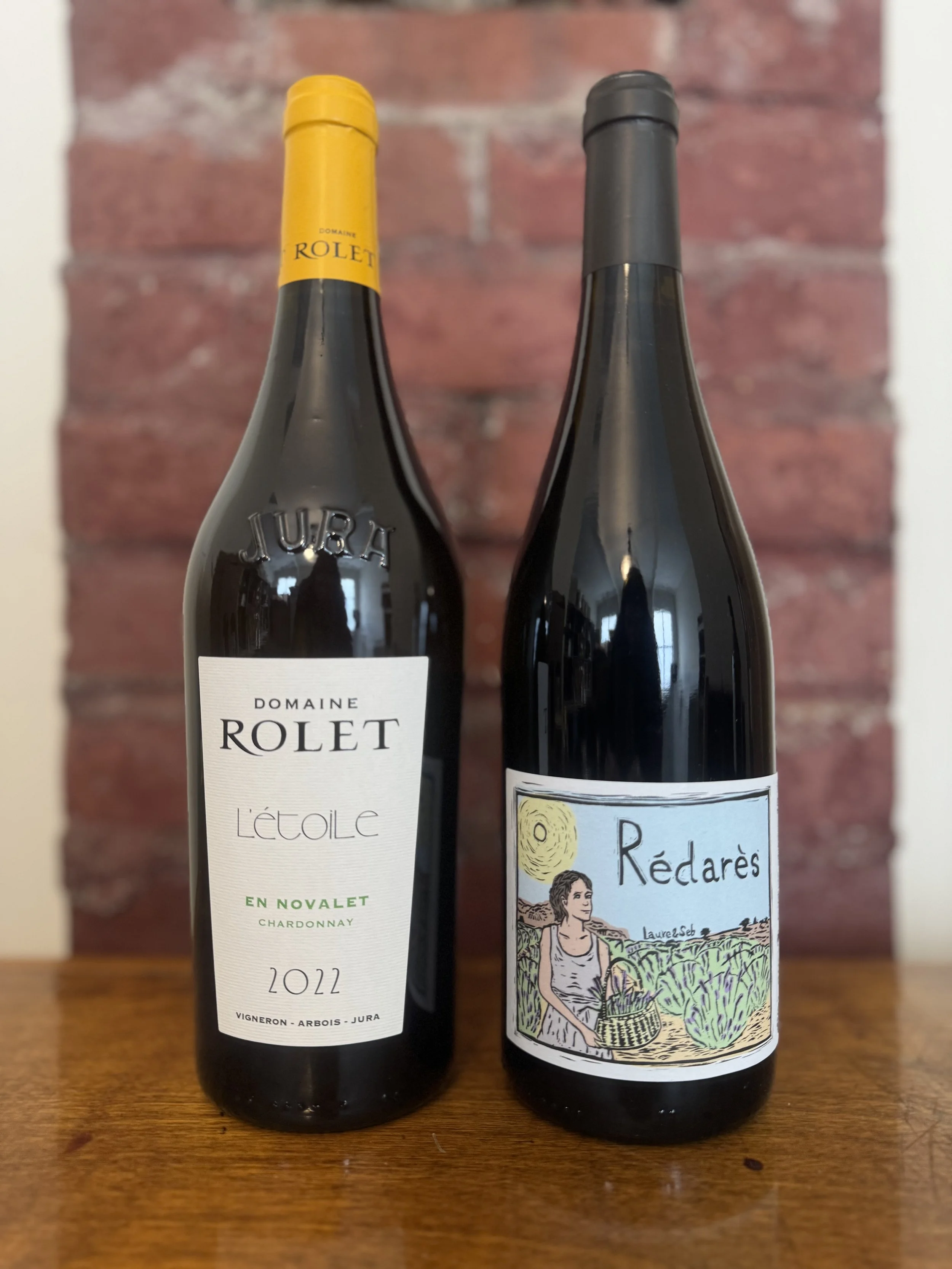
Rolet L'Étoile Chardonnay 2022
Domaine Rolet, founded in 1942 by Désiré Rolet, is one of the jewels of the Jura wine region. His four children—Pierre, Eliane, Guy, and Bernard—later took over, each taking on different roles within the estate. In just two generations, the Rolet family, through tireless work, has risen to become one of the leading names in the Jura wine region. The second smallest Appellation d'Origine Contrôlée (AOC) in the Jura, L'Étoile, with its 67 hectares, boasts a mineral terroir, reflecting its marl and limestone soils. “The Pentacrines” designation was officially established by decree in 1936 and its production area covers 4 municipalities: L'Étoile, Plainoiseau, Quintigny and Saint-Didier. The poetic name of this AOC (Appellation d'Origine Contrôlée) originates from the eponymous village nestled in the heart of this vineyard, surrounded by five limestone hills forming the points of a star . Countless fossils of the same shape, pentacrines, are also found among the vines. These belong to the crinoid family, which also includes sea urchins and starfish. They bear witness to the unique character of this terroir and to a time when the Jura region was home to a shallow tropical sea. This wine was exciting upon first taste. The golden yellow tone, the rich aromatics of oak and bruised apple. But the palate is even richer with an almost smokey grilled pineapple, a fatty mid palate and structured acid. The flavor evens out the longer you drink it, leaning into a complex but fruity sip.
Chateau del Ranq Pic Saint Loup “Redares” 2022
Château Del Ranq is located in Claret, on the Pic Saint-Loup, and is owned and operated by Laure Barthélémy and Sébastien Freychet, of which the latter’s family has owned the vineyard since the 1200s. This wine is cool for a lot of reasons. For starters, it’s organic and biodynamic, which is a great buzzword but let’s talk about what that means. “Biodynamic” is a practice that takes place in both the vineyard and the cellar. It’s tough enough to be organic, but this takes it a step further. Agriculturally, it is a holistic system that treats the vineyard as a living ecosystem. It goes beyond “no synthetic pesticides or herbicides” (the baseline for organic farming) by emphasizing soil vitality, biodiversity, composting, and farming in rhythm with seasonal and lunar cycles. In the cellar, this looks like low-intervention winemaking. This can mean native yeasts, gentle handling, and minimal additives. But in addition to being biodynamic, the vineyard itself has been female owned since the 1200s, being passed down from woman to woman over generations. Sébastien is the first “male heir,” if you will, but we can pretend that the tradition continues through his wife. The wine itself has incredible Christmas likeness. The nose boasts cranberry, boysenberry, pomegranate, and forest floor. The palate is lightly carbonic with macerated berry and chalky, sticky tannins- reminiscent of chewing on a fruit stem.