
Villages
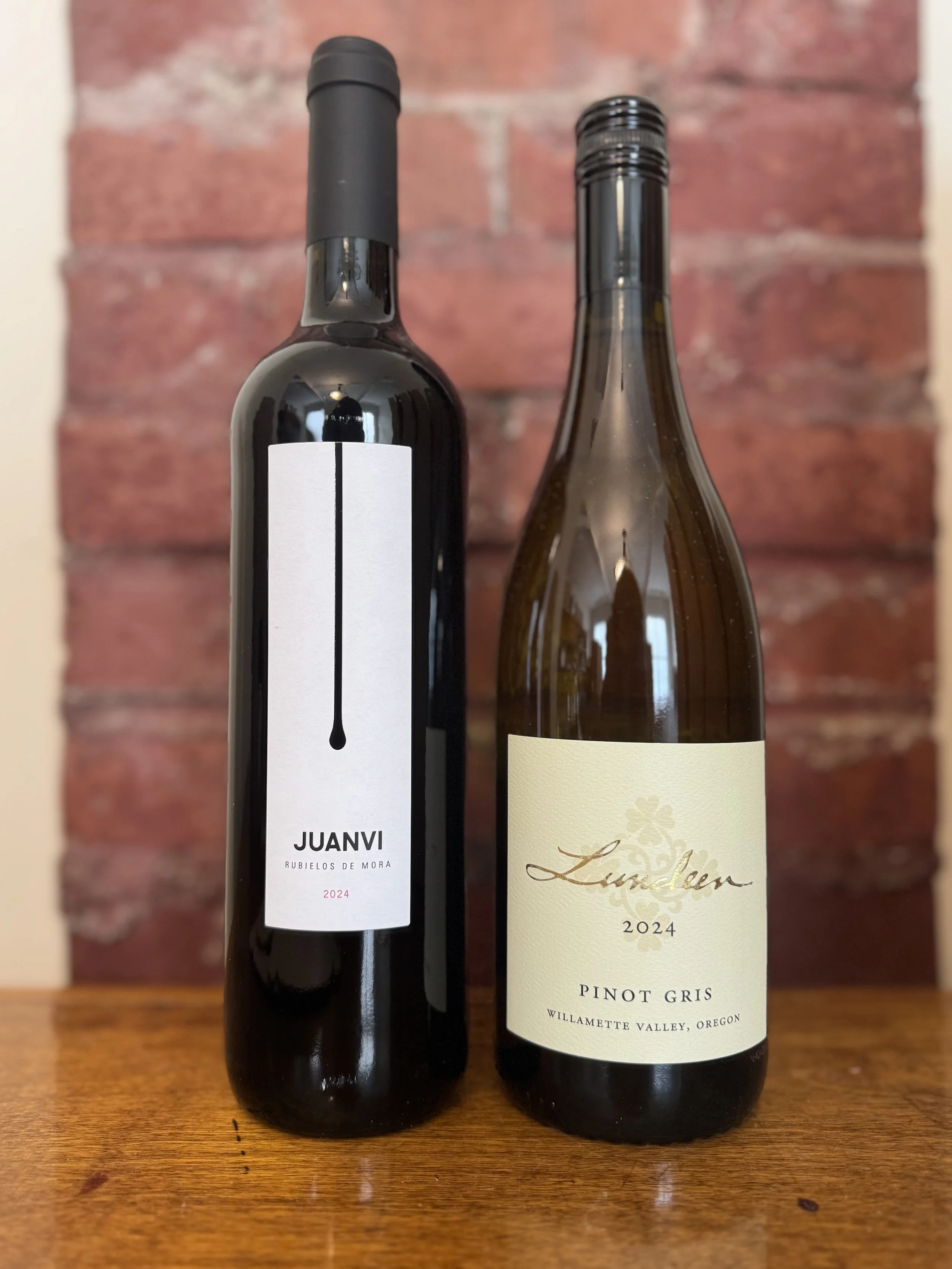
Lundeen Pinot Gris 2024
Michael Lundeen, a third-generation Oregonian, found his calling to make fine wine in the Willamette Valley after returning to his family’s Yamhill County farm. Michael directs the farming of nearly 40 acres utilizing no-till and organic practices and maintains the “LIVE” sustainability certification (Low Input Viticulture and Enology), one of the world's most robust programs. This Pinot Gris came from vines that Michael planted by hand with his father more than 20 years ago at the family’s Poverty Bend Estate Vineyard located just outside of McMinnville. The nose is slightly reminiscent of Marcona almonds with notes of pear and chamomile. The palate is much brighter. The lemon curd acidity causes a salivary response but levels out with minerality, herbal white tea, and a light peppery note. The best part about the palate is the texture; there’s a creaminess and weight that balances the acidity. Pair with the Pacific Northwest’s finest- salmon, risotto, or gorgonzola.
Juanvi Rubielos de Mora 2024
“¡Teruel Existe!” (Teruel Exists!) is the slogan of a citizens’ movement that began in the remote Spanish town of Teruel, located in the south of the province of Aragón—the second-least populated province in Spain. Teruel is emblematic of a socio-economic phenomenon called “España vaciada” (meaning “emptied” or “abandoned” Spain). The vineyards are located in the Gúdar-Javalambre range in Aragón, a wild and ecologically-diverse region of Sistema Iberíco. The Juanvi team is led by Rubielos de Mora native and winemaker Juan Vicente “Juanvi” Alcañiz, aided by his vineyard manager Melchor Ramos, who is a master of the region and its native grapes. In an effort to revitalize mountainside single-vineyards, they have dotted the mountain with plots of old-vine Garnacha, Syrah, Tempranillo, and Miguel de Arcos. This particular blend is 70% Garnacha and 30% Tempranillo. The aromatics are certainly youthful with blueberry, blackberry, and dark stony notes. The palate is lively and fresh. Vinification in concrete (as opposed to oak) allows the fruit to shine. Jammy black cherry melds with subtle smoke and ashen tannins. I’d pair this one with tacos- particularly chorizo or grilled mushroom.
Premier Cru
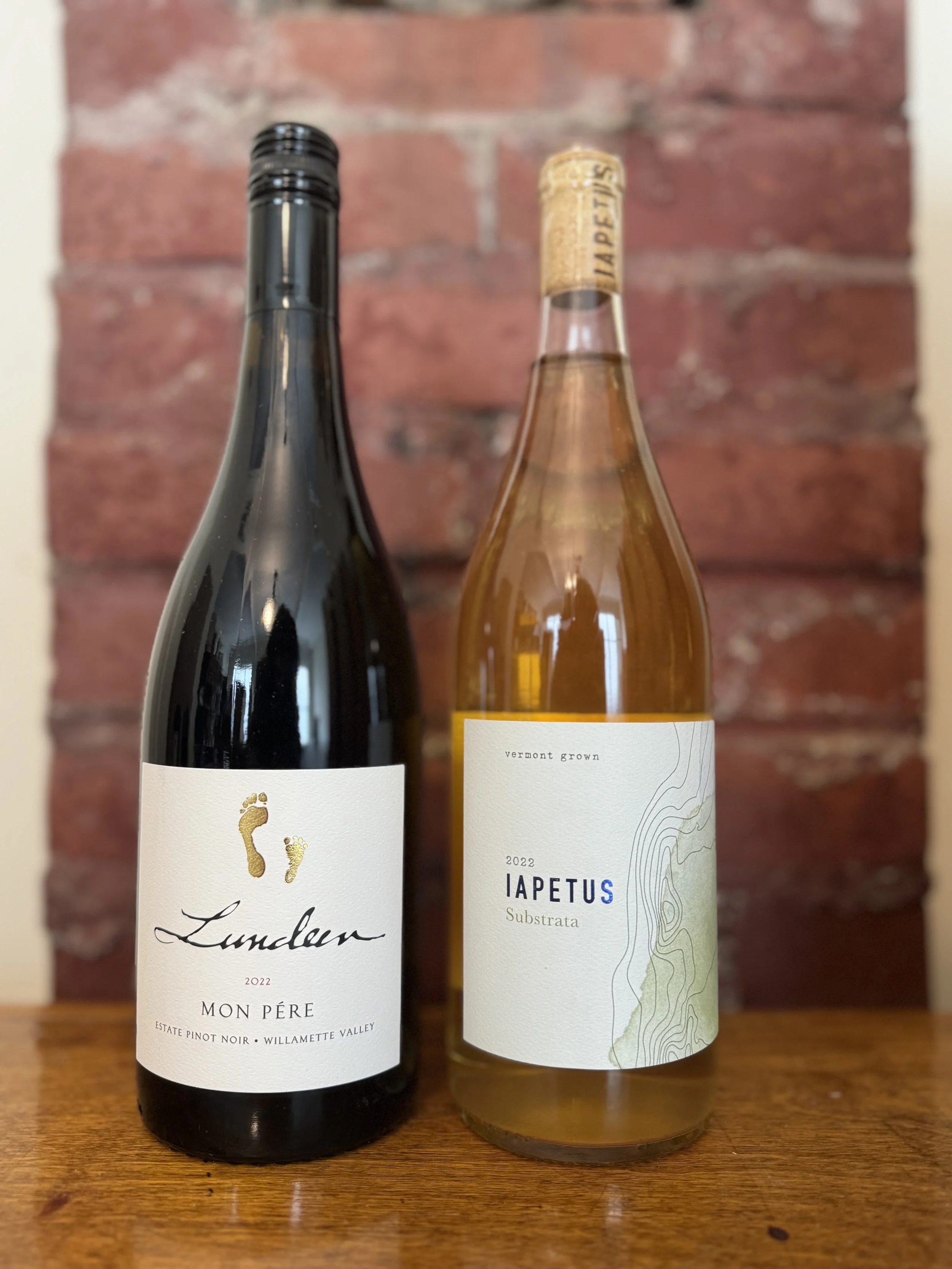
Iapetus Substrata 2022
We’re doing another first for the Locke Store- a wine from Vermont! Iapetus is the name of the ancient sea which once covered the bedrock that is now Champlain Valley. The Substrata blend is 80% Louise Swenson and 20% Itasca, and the reason you probably haven’t heard of these grapes is because they are specifically designed in the Midwest to be cold hearty, low in natural sugars, short-seasoned, and even disease and pest resistant. Fermented in stainless steel and neutral Hungarian oak barrels and spontaneously fermented, with battonage (stirring of lees) performed weekly for the first three months. Initially, this wine has similar aromas to an “orange” wine. Think tart fruits with tannic skins, like white plums or persimmon. It opens up with nectarine and salt that makes it more enticing. The palate is tart and vibrant but with a focus and a coconut reminiscent softness that prevents it from being unwieldy. There’s a roundness in weight and texture here that elevates a “natural” style while still being a bit edgy. This would be great with salty cheese, Caesar salad, or herbed chicken.
Lundeen Mon Pére Pinot Noir 2022
Michael Lundeen, a third-generation Oregonian, found his calling to make fine wine in the Willamette Valley after returning to his family’s Yamhill County farm. Michael directs the farming of nearly 40 acres utilizing no-till and organic practices and maintains the LIVE sustainability certification (Low Input Viticulture and Enology), one of the world's most robust programs. Meaning “My Father” in French, “Mon Père” is meant to honor Michael’s father and fathers everywhere while providing tremendous value in a Willamette Valley Pinot Noir. Willamette is one of my personal favorite regions in America and it is also the fastest growing ecological region in the States. Because viticulture is growing so rapidly in Oregon, it’s actually a bit rare to find a winemaker that’s from the region. Everyone wants a piece of Willamette, and for good reason. Forest floor is the highlight of aromas here (fun fact if you’re ever at a party and want to sound fancy: this term is called “sous-bois,” pronounced sue-bwah). Notes of violet and black currant follow, quickly tailed by umami mushroom. The palate boasts mouth-watering acidity, cranberry, rose petal, and tide pool rocks. This wine is very well-balanced, so you could treat it like a Red Burgundy as far as pairings go: roasted duck, turkey, mushrooms.
Grand Cru
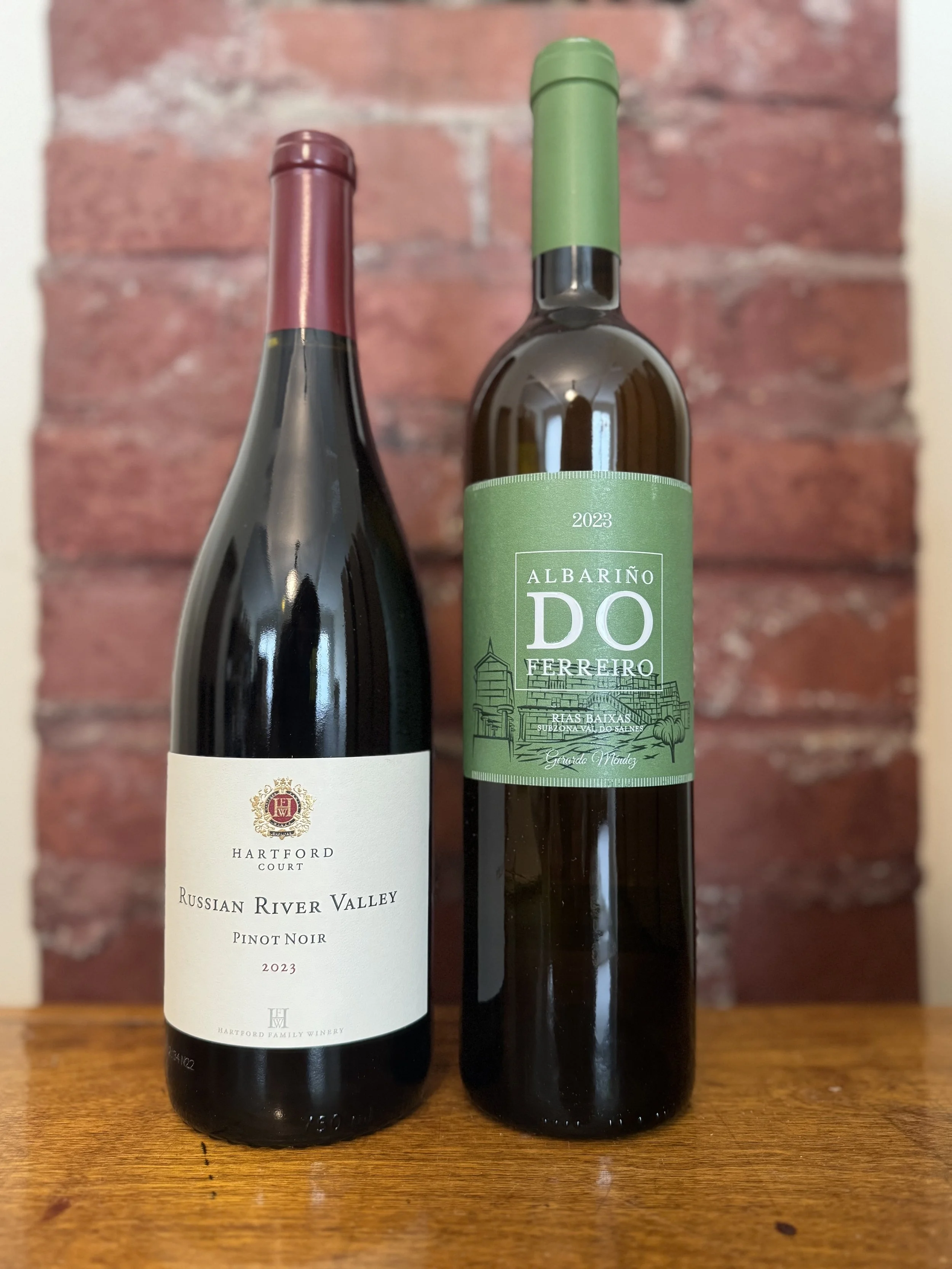
Do Ferreiro Albariño 2023
Quick history lesson here: Gerardo Méndez was part of the original group of 14 growers who elevated the region’s potential, as he and his father Francisco were integral in forming the original denomination of origin Rías Baixas in 1988. The first wine made by Gerardo without labels was in 1973, with the first labeled vintage wine from Do Ferreiro appearing in 1986. Why is any of this important? In the early 1980s, there were almost no dedicated wineries in Rías Baixas and all the wine was made in people’s homes for personal consumption or sold to the local cooperative. Currently, they farm over 175 tiny plots of Albariño by hand, located in the Salnès subzone of Rías Baixas. This valley’s proximity to the ocean, ideal climate due to the natural protection by mountain ranges, and decomposed granitic soil have gained the reputation for being the ideal zone in Rías Baixas for growing profound Albariño. The nose on this Albariño is more complex than “clean.” Cantaloupe, ocean salt, and mandarin are prominent. The palate is rich in salty, mineral notes and lemon balm. The best thing about Albariño is that it makes you crave food. I suggest oysters, prosciutto, or romano cheese.
Hartford Court Pinot Noir 2023
Established in 1994, Hartford Family Winery is owned and operated by a father-daughter team and their winemakers, Jeff Stewart and Tiaan Lordan. By 1996, the winery started receiving critical acclaim and was even served in the White House numerous times between 1997 and 1999. Their vineyards scatter California- besides Russian River Valley, they also occupy Green Valley, Sonoma Coast, Anderson Valley and Carneros appellations. So why Russian River? Fog, mostly. Pinot Noir has thin skin and prefers a slower growing season and fog allows for the cooling of the vines in the Summer and acid preservation in the Fall. This was the first wine I picked for the club this month because the quality was so incredible; elegant, true-to-form, and an excellent representation of Pinot from this valley. On the nose there are immediate cranberry and cherry pie aromas followed by a flinty, river rock minerality. The palate is incredibly juicy with full, supple fruit. There is almost no “bite” here- just a beautifully jammy red with a lightly spicy finish. Further sipping gives way to soft and almost elusive tannins, black stone, and deeper cherry notes. For pairings, I’d personally lean into cheeses like Gruyère, Gouda, or Brie. Essentially anything earthy or smokey would work here.