
Villages
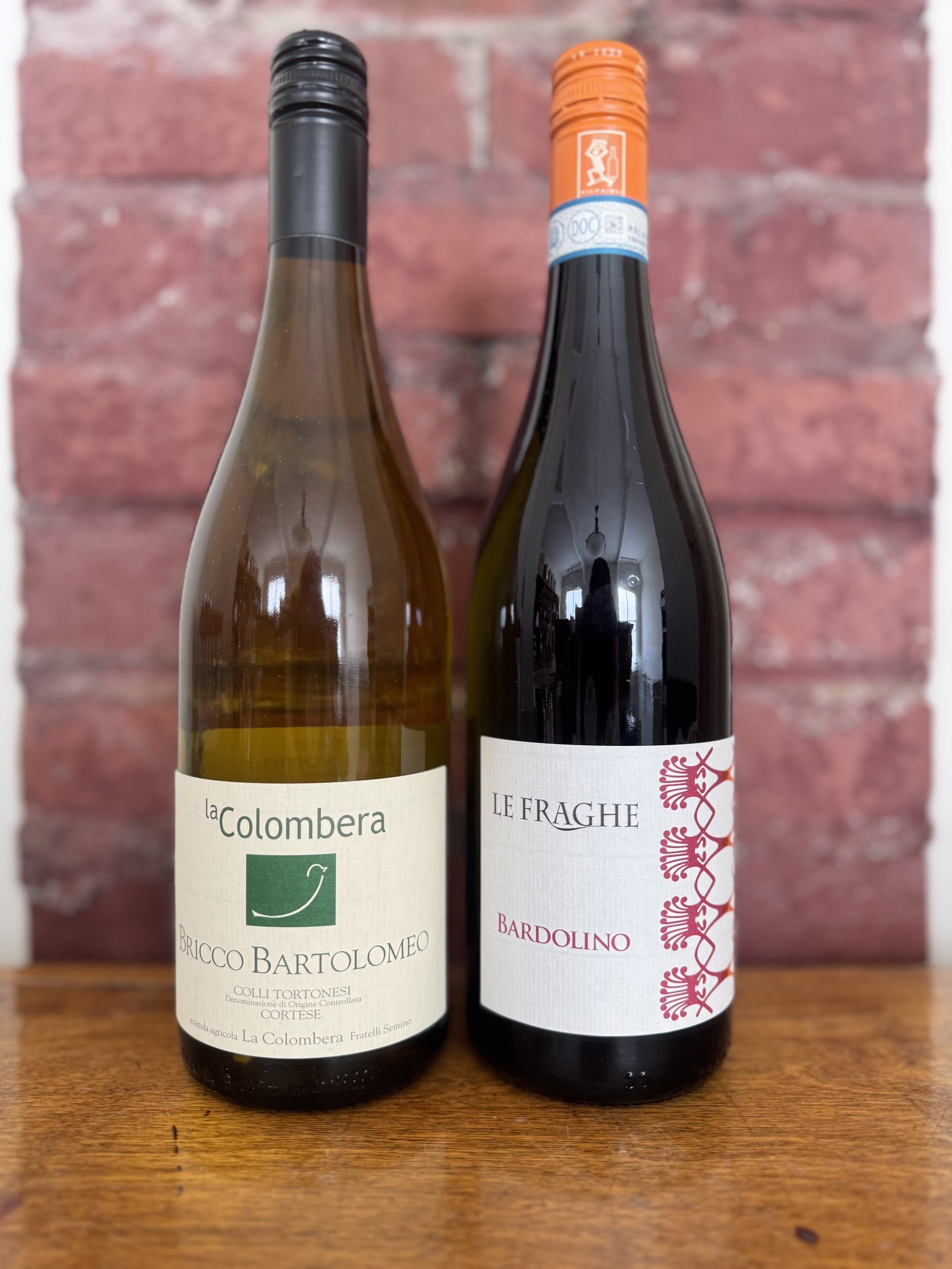
La Colombera “Bricco Bartolomeo” Cortese 2024
Elisa Semino owns and runs La Colombera together with her father and brother. Their location, the Colli Tortonesi, is considered the “doorway to Piedmont” because of its location intersecting Lombardy and Liguria. If you’ve ever had the white wine “Gavi,” you’ve had the Cortese grape before! La Colombera farms organically and has done so for the past 20 years but is not currently certified. No pesticides or herbicides are used, but certifications come at a cost. When you’re talking about organic certifications, you’re essentially asking the grower if they’re able to risk losing the entire crop for a year’s production or more. The nose is very dry and definitively “Summer.” Think dry straw or the dirt in a baseball field. The palate is tart and is begging for a creamy pasta or soft cheese. After less than five minutes spent in the glass, the wine opens up immensely and we discover more fruit and grass notes. It is worth noting that I tried this wine at cellar temp (about 55° F), so I’d recommend taking it out of the fridge and allowing it to warm up for about 30 minutes. Drink this wine with something creamy! As a rule of thumb, higher acid whites tend to do quite well with creamy or fatty foods because the cleanse the palate between bites.
Le Fraghe Bardolino 2024
Matilde Poggi is the winemaker at Le Fraghe. In the 1980s she was among the few women at the forefront of the wine world and is currently the president of the Federazione Italiana Vignaioli Indipendenti (or FIVI, the Italian Federation of Independent Winegrowers). This wine is a blend of Corvina and Rondinella grapes grown in the Veneto region, specifically the communes of Affi and Cavaion Veronese. The Bardolino growing area is between the base of Lake Garda and Valpolicella, not far from Verona in Northeast Italy. Matilde’s Bardolino contains more Corvina than is normal, with only 20% of the wine being Rondinella.The two varieties are fermented separately and then blended, using no oak for aging. Le Fraghe has been certified organic since 2009 and Matilde’s three daughters now help her run the winery. The nose is beautiful with underripe cherry, soft vanilla, and cocoa. The palate is very dry and food friendly. Soft tannins and higher acid makes this wine an easy drinker, but it can be as complex as you choose. This would be a great pizza wine, but I would also recommend charcuterie or risotto.
Premier Cru
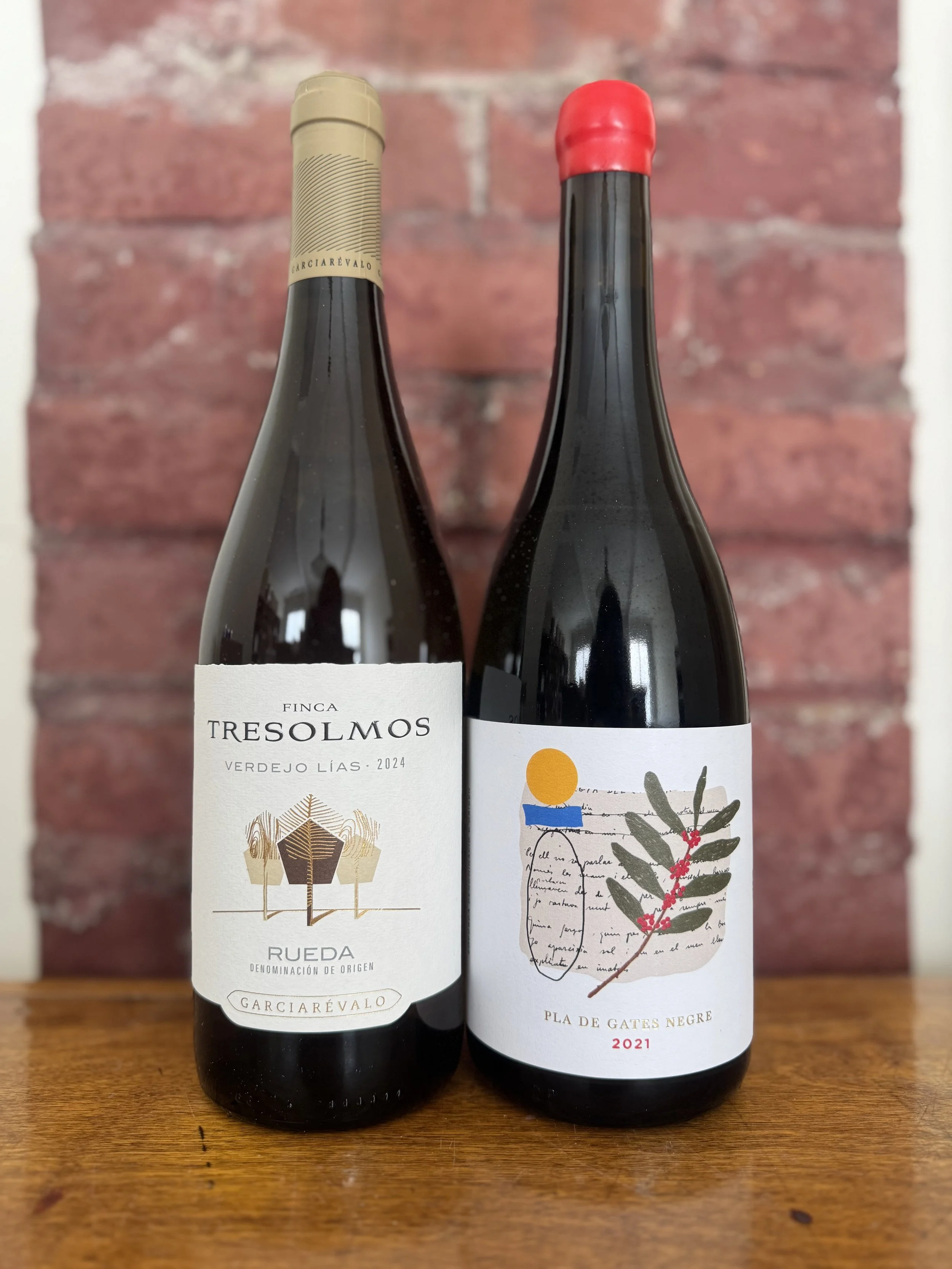
Garciarvello TresOlmos 2024
Reyes Martínez-Sagarra is the winemaker and Oenologist responsible for this Verdejo. The vineyards that make Tresolmos are located near the confluence of the rivers Adaja and Eresma, where an exceptional microclimate provides temperatures up to five degrees cooler than the surrounding area. This zone also offers a big climatic difference between daytime and nighttime temperatures, which is key for retaining acidity. Far from the expected arid environment here in western Castilla y León, this location, at an elevation of 730m and within a pine forest, provides ideal conditions for growing beautiful, fresh Verdejo grapes. This results in small grapes with a concentrated flavor and a perfect balance between sugar and acidity. The nose provides a ripe fruit experience (specifically dragonfruit) with zesty and floral notes. The first sip is mouthwatering- it instantly activates a salivary response. The higher acid quickly yields to a soft body and a long finish of tropical florals. It is worth noting that I tried this wine at cellar temp (about 55° F), so I’d recommend taking it out of the fridge and allowing it to warm up for about 30 minutes. My immediate pairing recommendation is manchego cheese!
Anna Espelt Pla de Gates 2021
Anna got her start at her family's estate in the Empordá DO (Denominación de Origen or Designation of Origin) of Catalunya, called Espelt Viticoltores, in 2005, but while hiking around the Cap de Creus Nature Reserve, she recognized not only its natural beauty, but the potential for reviving some of the ailing vineyard sites. She also realized that there's evidence of humans being there since the Bronze Age, so she knew that it was a very special place. She now has 25 hectares of vineyards known collectively as Mas Marés and, in her words describes them as, “a land of granite, wind, blue skies and the smell of wild herbs and sea spray.” Having studied habitat restoration and organic farming, Anna has always sought to bring her values in line with the farming practices used on the estate. The Pla de Gates Negre is made entirely of Lledoner (Grenache) in the medium weight style of “New Spain.” The first whiff made me say aloud, “Ooo violet!” but the more interesting note following the fruit was cinnamon raisin, which is very enticing. The purity of this wine shines through in its weight and clean fruit. The tannins are strict like plum skins but this wine opens up quickly and beautifully. While sausage or lamb are obvious pairings for this spicier style of wine, I encourage you to try this with ratatouille or bean stew as well.
Grand Cru
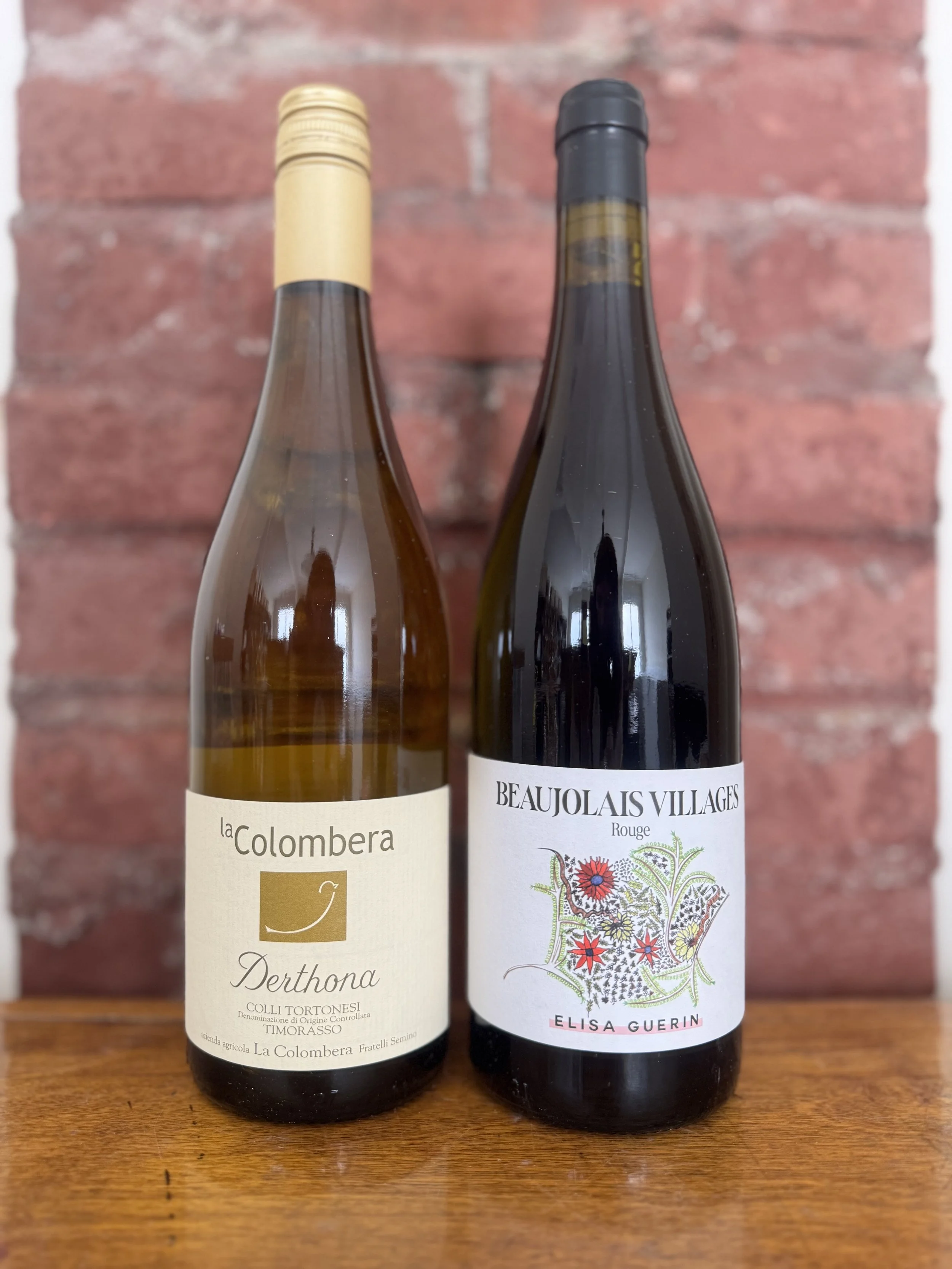
La Colombera Derthona 2023
Timorasso is a local white grape vine, cultivated in the Tortonian territory since the Middle Ages and was recognized as the most important Piedmontese white vine at that time. After World War II its production was gradually abandoned and traded for heartier varieties. In the ’90s Piercarlo and Elisa (our female winemaker), together with some young winemakers of the Colli Tortonesi, are among the first 5 wineries to believe in the rediscovery of Timorasso (Claudio Mariotto was also one of those wineries, if you’ve been in the club for a while and this all sounds familiar). Elisa Semino owns and runs La Colombera together with her father and brother. La Colombera farms organically and has done so for the past 20 years but is not currently certified. No pesticides or herbicides are used, but certifications come at a cost. One of my favorite and most surprising notes for this wine is the aroma of kalamata olives. There are also toasted nuts, lime peels, and orange zest. The palate has a creamy entrance with bright fruit reminiscent of “Smarties” candy and a toasted sesame finish. The baseline of minerality ties the fruit and oak notes together quite nicely. This is a complex and beautiful wine! It is worth noting that I tried this wine at cellar temp (about 55° F), so I’d recommend taking it out of the fridge and allowing it to warm up for about 30 minutes. This is such a complex wine that I’d recommend keeping it simple with pairings- think pecorino or parmesan cheese.
Elisa Guerin Beaujolais Village 2024
Elisa Guérin delivers a fresh new vision for Moulin-à-Vent and a reminder of how noble the grape Gamay can be. The Guérin family estate consists of 4.2 hectares in Moulin-à-Vent containing 1.5 hectares of a single plot of ‘Les Thorins,’ considered the most Burgundian of all Beaujolais terroirs, even to this day. Why does this matter? Let’s chat Beaujolais/Burgundian history. For starters, the red grape of Burgundy is Pinot Noir and Beaujolais is Gamay. Skipping over the Romans and the Benedictine Monks and moving straight to the 1980s, the Beaujolais region found themselves in a marketing fiasco that ultimately tarnished their reputation- Beaujolais Nouveau. An easy drinking, super fresh, fruity wine that's bottled quite quickly and released in November, this wine was a great way to catch American consumers. As the craze got away from itself, producers were making what the French called "vin de merde" or “shit wine” and Gamay developed a bad reputation. In more recent years, Beaujolais has found itself rebuilding its reputation. This specific version is a far cry from Nouveau. Cranberry and violet highlight the nose and there is a subtle copper-like earthiness. There is good acidity on the palate and looser tannins that feel very much Gamay, but notes of violet and cured meat make it definitively Burgundian.