
Villages
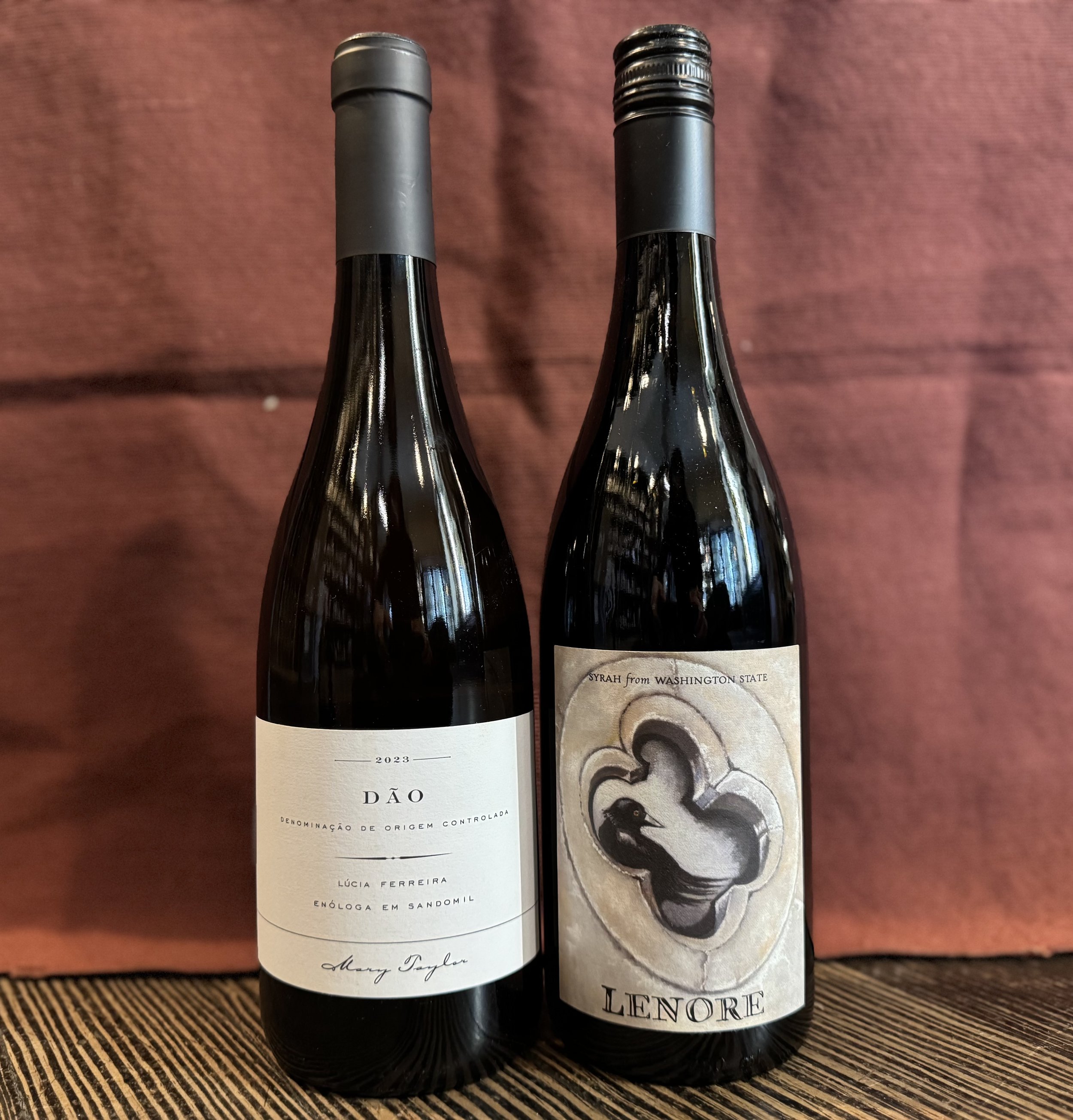
Mary Taylor Dão 2023
Our wine from the Dão is from the Quinta do Covão in the stunning village of Sandomil, with its fluvial beach in the river Alva and its old Roman bridge, nestled in the Beira Alta subzone, near the city of Seia. The vineyards of the Quinta are scattered along the slopes of the Estrela mountain range, deeply in a continental climate with high altitudes where cool nights follow warm sunshine. This climate, combined with granitic soils and fresh river water, is ideal for growing grapes with high acidity and making wines that can be cellared. The 2023 Dão Branca from Lúcia Ferreira is composed of 35% Encruzado, 32% Malvasia Fina (also known as Boal in Madeira), 19% Bical (if you drink Pato wines, you definitely know this grape) and 14% Gouveio (the grape of Vinho Verde). Encruzado operates quite similarly to Chardonnay, providing elegance and a finessed base, while the remaining varieties add the crisp acidity and depth that this wine undoubtedly possesses. The wine is fermented with native yeasts and raised in stainless steel tanks. I love the weight of this wine- it truly provides the experience with balance and a seriousness that isn’t typically associated with Portugal (though it should be- Portugal is still the best “bang for your buck” as far as global wines go. We paired this with sardine little gems, though a standard Caesar salad would do the trick (not to sound like the Barefoot Contessa).
Corvidae Wine Company “Lenore” Syrah 2019
Owen Roe is a winery founded by David & Angelica O’Reilly, located in Oregon and Washington and established in 1999. Corvidae is Owen Roe's value-driven second label based primarily in Yakima Valley, Washington. For reference, the Owen Roe label typically sells for $55-85 and is designated by vineyard. Much of the fruit for Corvidae is sourced from Owen Roe's 280-acre “Outlook” Vineyard. David O'Reilly is as meticulous with the winery and the vineyard for Owen Roe as he is Corvidae. “The purpose of the brand,” says O’Reilly, “is to work with affordable fruit. I don’t add acid, I want to take what nature gave me and just pass it on. It’s lovely having this brand; I can experiment.” “Corvidae” is Latin for the crow family of birds, which are a common presence in the eastern Washington vineyards. This bottling of 'Lenore' is named for Edgar Allan Poe's poem "The Raven.” So far, many of the wines in this collection are named for folklore containing the species of bird. This wine is shocking in its value, the most noteworthy of words that come to mind is “clean,” which is not a word that I typically use for Syrah. There is still substance, however. The structure is tense like thin glass and the texture is almost reminiscent of nitro cold brew coffee (but perhaps that is the coffee flavor on the profile). Pair this with lamb, prosciutto, or perhaps a fireplace since it’s been evil cold!
Premier Cru
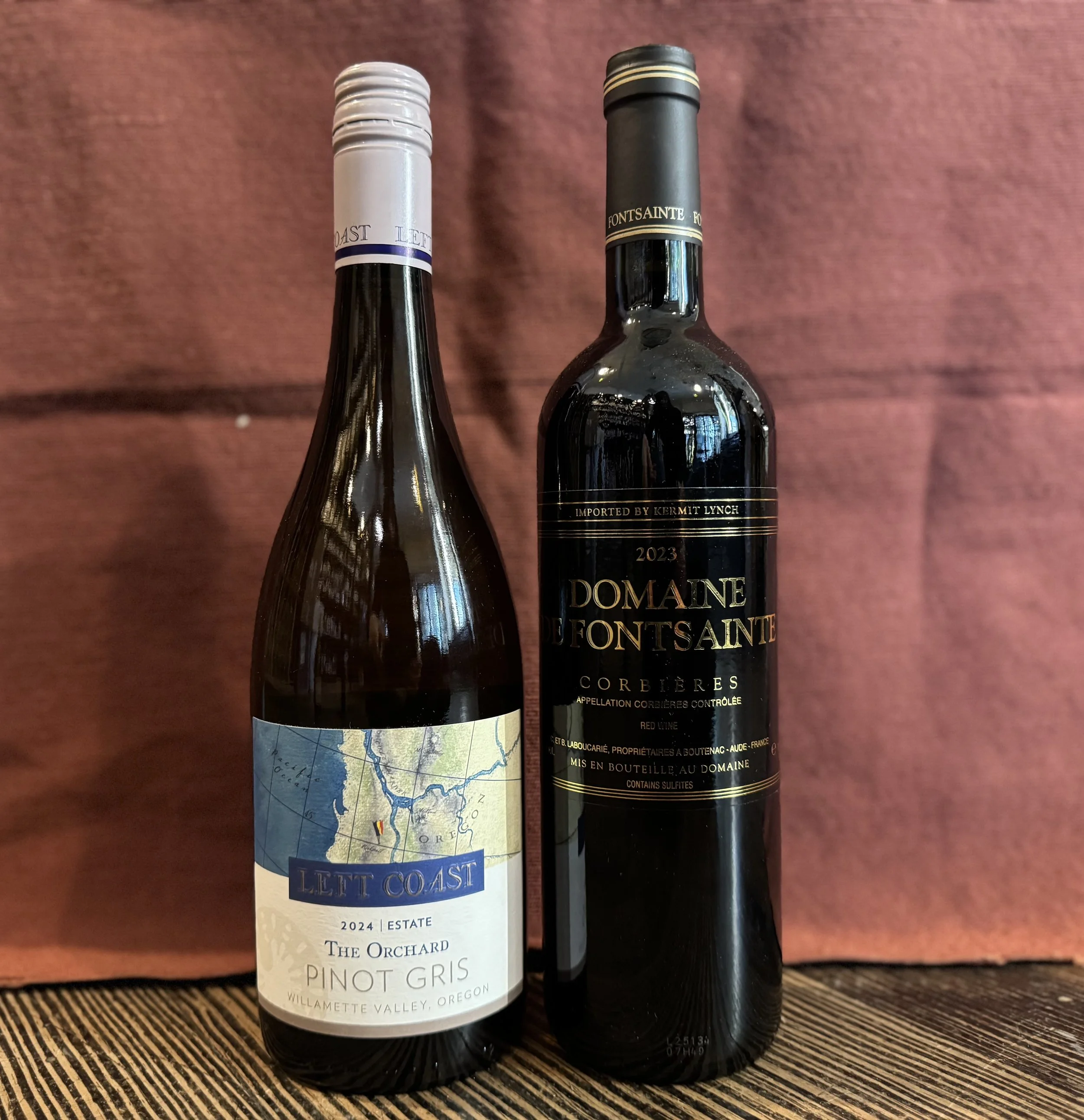
Left Coast “Orchards” Pinot Gris 2023
The Left Coast winery is a family operation and the name “Left Coast” is in part recognition of geography, but also a playful nod to the fact that three out of five family members are left-handed. Fun, no? Moving on! Cooling coastal breezes flow through the Van Duzer Corridor to the roots of the vines, protecting grapes from over-ripening and preserving the acidity that shines in this wine. The protected oak trees and other local flora and fauna add to the estate’s biodiversity. Their viticulture program acts as the backbone of their winemaking operation. With most of the wine sourced from the estate (and all of the fruit of this specific wine being estate-grown), the grapes are responsibly grown and hand tended. The vineyard implements gravity-fed drip irrigation, solar energy for operations, and cover crops to attract pollinators. “Orchards” refers to the Orchard block. Originally planted in apples by the settlers of Holmes Gap, this area was also the earlier home of pear and cherry orchards. The Orchards block is now dominated by Pinot Gris plantings and one singular majestic oak tree. When it comes to pairing, playing with the acidity here is key. Acid cleanses the palate of fat. Pair with creamy cheeses, risottos, fettuccine alfredo, white pizza, etc.
Domaine de Fontsainte Corbières 2023
Corbières is a region in the Languedoc region of southern France named after the mountain range that defines the AOC. The first vineyards at Domaine de Fontsainte, in the Corbières appellation, were planted by the Romans. Artifacts found in these vineyards, such as an old coin dating from the time of Marcus Agrippa in 25 A.D., are a testament to its antiquity. The original Domaine was built around a thermal spring, which was later named for the local, twelfth-century patron saint, Saint Siméon; hence Fontsainte—the “saint’s fountain.” The Laboucariés of Domaine de Fontsainte, who, for years, have crafted ethereal and delicious rosés (you’ve probably seen these at the Locke Store- they’re delightful and affordable) and soulful, terroir-driven reds in the appellation halfway between Montpellier and the Spanish border. Their vineyards surround the hamlet of Boutenac in one of the sunniest stretches of Corbières. But when you taste the family’s lively rouge, you might be surprised to find this is not a robust wine concentrated by long hours of intense sunshine. Boutenac’s warmth is balanced by cooling sea breezes and by Fontsainte’s old vines whose roots dig deep for water and keep the grapes refreshed. This wine, as with most wines from the region, is made predominantly from the elegant Carignan grape and enlivened by Grenache and Syrah. While this could be an easy pick as a “steak wine,” I believe the complexity would lend more nicely to duck, lamb, or beef stew.
Grand Cru
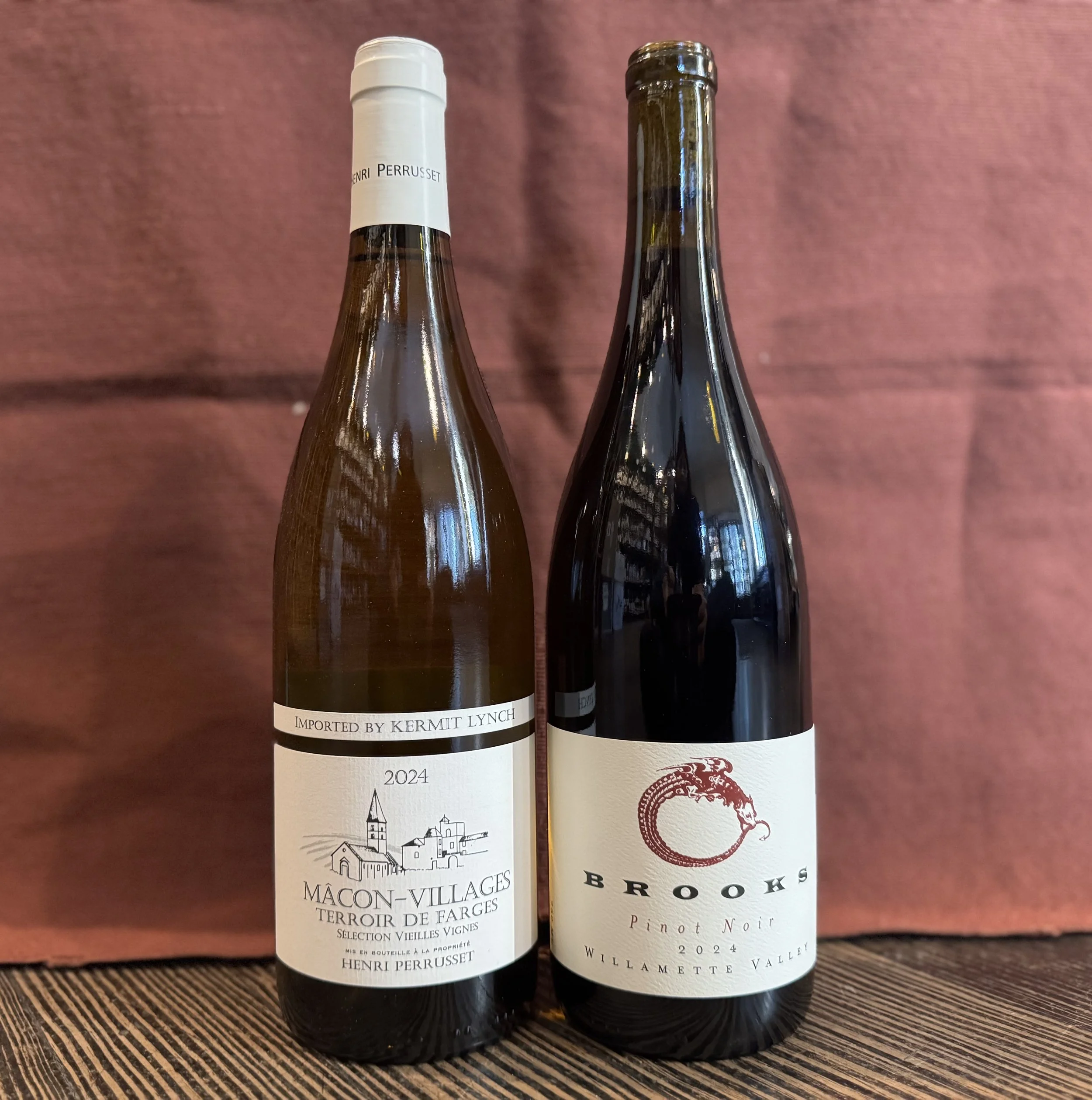
Henri Perrusset Mâcon-Villages 2024
As much as we praise the bracing, mineral, and briney Chardonnays of cool-climate Chablis, what about those from Burgundy’s most southern realm, the Mâconnais? Like Chablis, this corner of the region is also devoted to Chardonnay above all else, but it shines a light on a different side of the grape, unique in Burgundy for its lusciousness. For decades, the Mâconnais has been dominated by the inexpensive offerings of cooperative cellars, which is not a bad thing, but not the sort of quality that leads most of the public to explore the wines of the region. At the same time, Henri Perrusset has been working his vineyards by hand, reducing his yields to improve grape quality, all while offering us very reasonable prices. The vineyard is “only” 6.5 hectares and the vines range between 15-30 years of age. The lively blancs of the Mâconnais mirror the playfulness of charming reds from neighboring Beaujolais. This is Chardonnay at its most easy-going and crowd-pleasing. It is also food-pleasing: pair it with seafood, chicken, most cheeses, or roasted veggies.
Brooks Pinot Noir 2024
Brooks Wine is a living tribute to founder Jimi Brooks, whose passion for farming, community, and purposeful winemaking shaped every vine and value the winery carries forward today. When Jimi passed unexpectedly in 2004, his eight-year-old son, Pascal, became the youngest winery owner in the country. The devoted community of friends and winemakers stepped in to make Jimi’s final vintage, and Jimi’s sister, Janie Brooks Heuck, took over leadership, volunteering her time to protect her brother’s legacy and preserve the dream he left behind. Over the years, Janie, Pascal, and the extended Brooks team have transformed that promise into one of the most heartfelt and respected stories in American wine. Currently, the winery is still owned by Pascal and is women-led. With Oregon being the leading territory for Pinot Noir and having the most distinct profile, it’s hard to find a bad one but it’s so much fun to keep trying new ones! Leading with typical violet florality and juicy red fruit, I personally love this wine for its slightly robust finish. There’s enough silty tannin here to carry it out of “fruit bomb” territory and into something more noteworthy. We paired this with barbecue mushroom skewers, but you do you!