
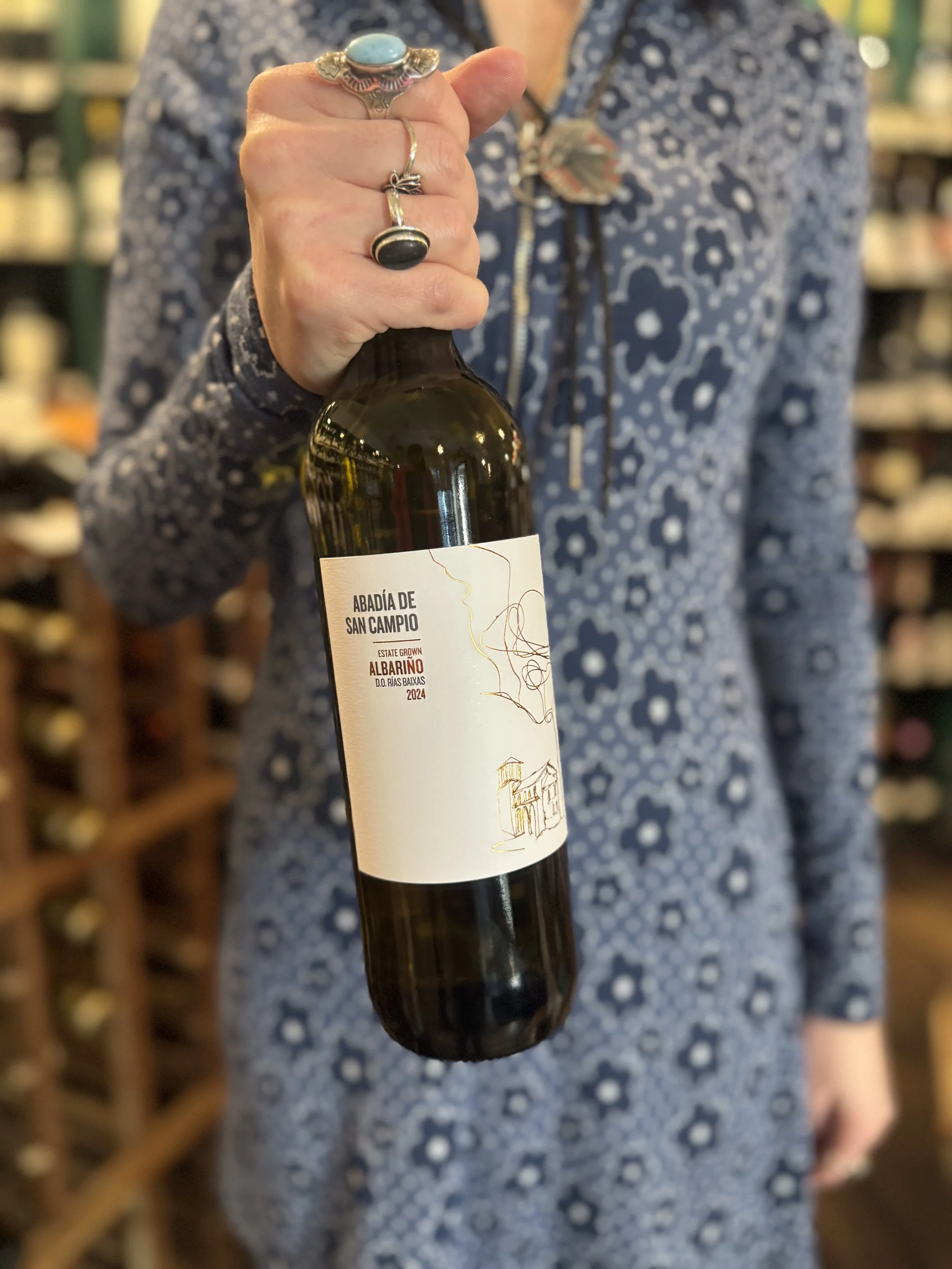
Terras Gauda Abadía de san Campo Albariño 2023
Origin: Spain
Retail:$19.95| Sale: $17.96
Terras (Land) Gauda (Happiness) was founded in 1989 by the Fonseca family in a southern sub-region of the D.O. Rías Baixas. Located on the banks of the Miño river, bordering Spain and Portugal and close to the Atlantic Ocean, Terras Gauda’s wines are mineral-driven, complex, and representative of their distinctive schist-rich terroir. Emilio Rodríguez Canas has been Terras Gauda’s Director of Winemaking since 1999 and is a pioneer in Galician research and development. Known for creating the first clonal selection of the Albariño grape using experimental micro-fermenters. His winemaking features 100% skin-contact maceration, temperature-controlled fermentation with patented yeasts, and sur-lee aging without malolactic fermentation.
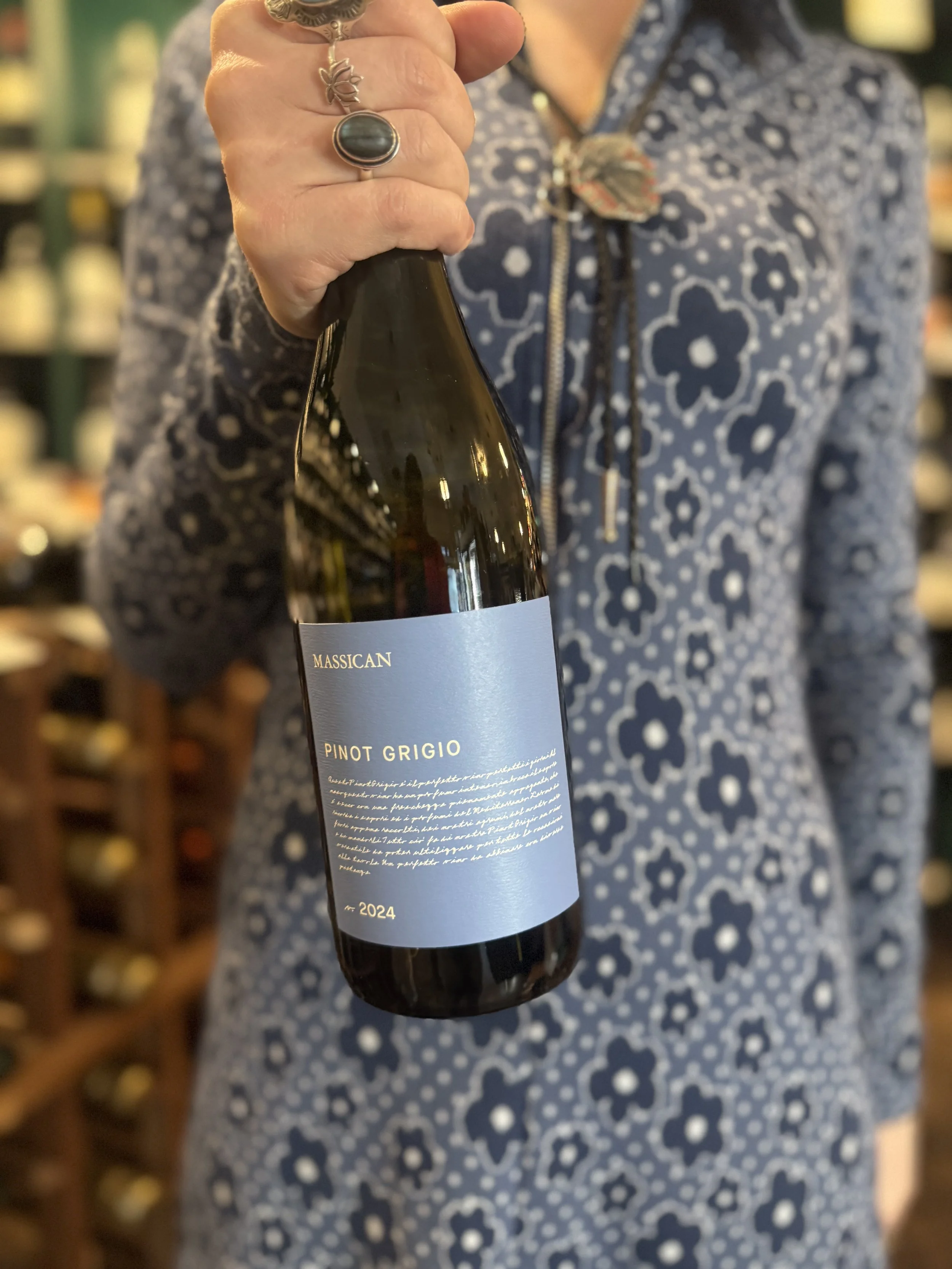
Massican Pinot Grigio 2024
Origin: California
Retail: $29.95| Sale:$26.96
assican is Napa and Sonoma’s only white wine winery. The wines are made from 10 grape varieties planted in 17 vineyards on California’s North Coast. The vineyards are farmed at minimum with sustainable standards and at maximum with certified organic practices. The winemaking is respectful of the vineyards and the grapes, and therefore, there is very little interference during the fermentation process to make these wines. Every grape from every vineyard is hand-harvested and fermented separately. The grapes are harvested at daybreak and then whole-cluster pressed at the winery. This Pinot Grigio is technically a blend of 81% Pinot Grigio and 19% Cortese, since a wine from California only has to be 75% of the grape represented on the label.
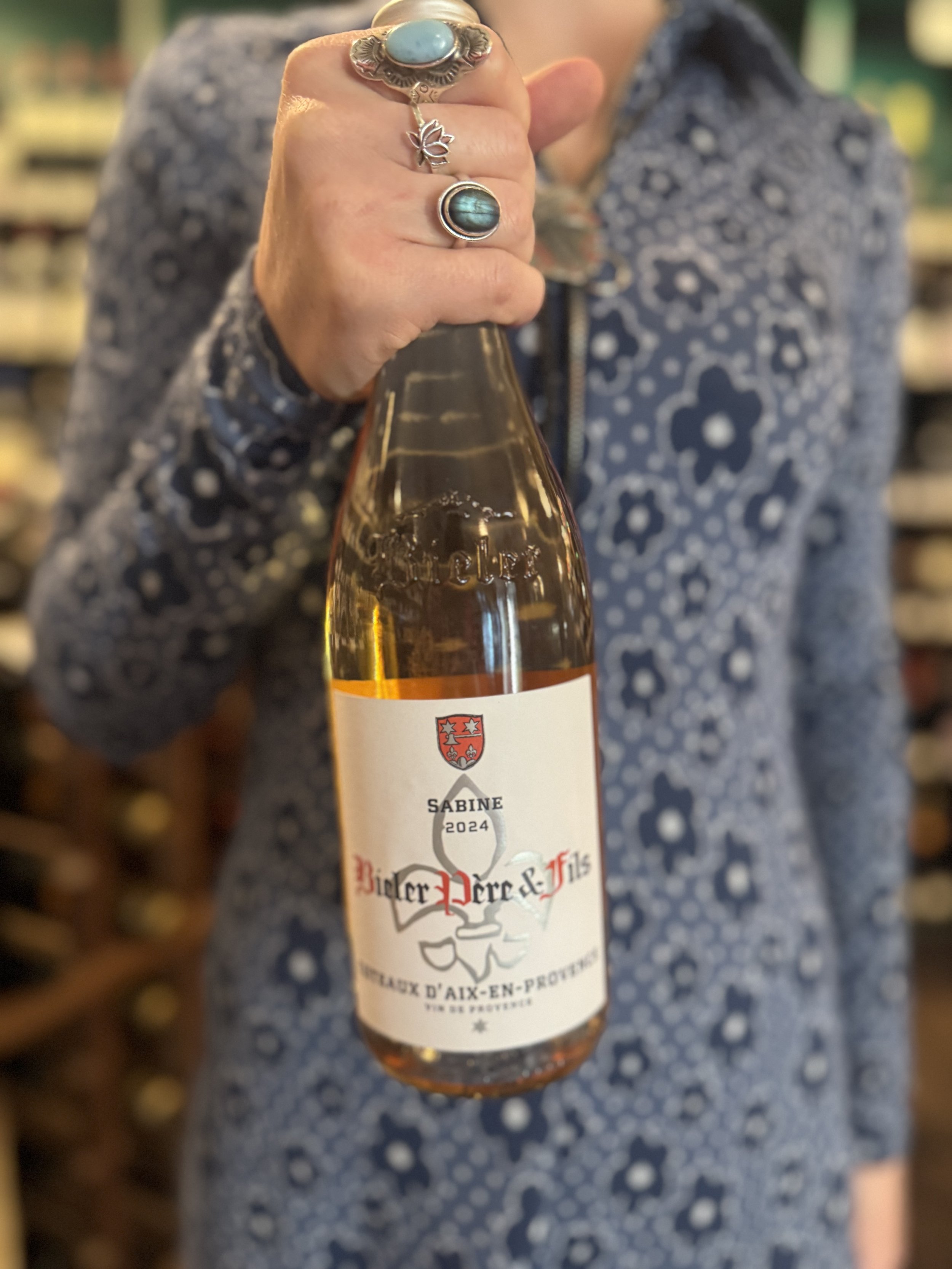
Bieler Père et Fils Sabine Rosé 2024
Origin: France
Retail: $17.95| Sale: $16.16
As the oldest wine growing area in France and the world’s largest Rosé specialty region, Provence is the gold standard in Rosé. There are 8 different appellations in Provence but only 3 that you need to know: Cotes de Provence, Aix-en-Provence, and Bandol. Most of the biggest Rosé producers are in the Cotes de Provence AOC, where the warmest growing regions in the flats of Provence produce higher yields and harvests tend to be quite early. For Bieler, they instead focused on the cooler, more rugged and higher elevation vineyards in the hills around Aix-en-Provence. The cooler nights in the hills around Aix-en-Provence means that they pick on average 2 weeks later than Cotes de Provence, allowing for a gentler ripening and more natural acidity, two critical attributes to make this kind of Rosé. The Southern Rhone and Provence are on the front lines of global climate change and these relatively cooler sites in the region have become more important than ever to make wines with balance and energy.
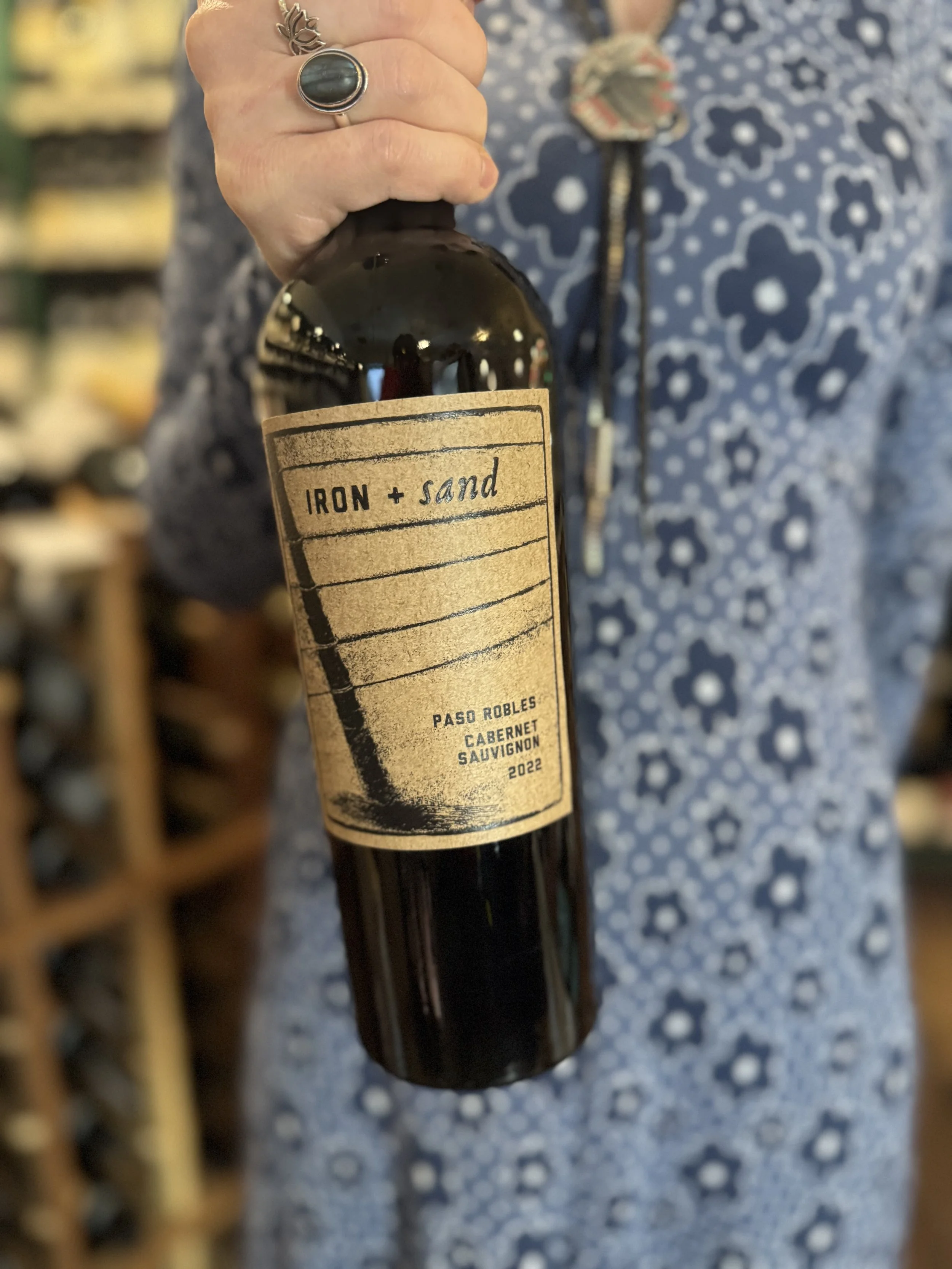
Iron & Sand Cabernet Sauvignon 2022
Origin: California
Retail: $29.95| Sale:$26.96
Once known for its thermal mineral springs as a rest stop for travelers along El Camino Real, Paso Robles is today known for producing world class wine. The springs in this region were named “Iron Spring” and “Sand Spring,” thus lending the name to this winery. The Cabernet Sauvignon grapes are sustainably sourced from renowned Paso Robles vineyards located in prime sub-AVAs; namely El Pomar and San Miguel. Once again following the 75% rule, this wine is composed of 90% Cabernet Sauvignon, 5% Petit Verdot, and 5% Petite Sirah. The majority of the juice is aged an average of 9 months in neutral French and American oak barrels to allow the fruit to shine through.